
When the spine is unstable or deformed, fusion stops painful motion so nerves can heal. We examine, confirm the diagnosis, and explain when fusion outperforms decompression alone. You’ll see the plan, risks, expected recovery, and return-to-work timelines before committing.
Note: When compression exists without instability, decompression alone may be enough — See Lumbar Laminectomy.
Neck: Cervical Fusion (ACDF)
A small neck incision removes the damaged disc, adds a graft or implant, and stabilizes the spine while easing nerve pressure.
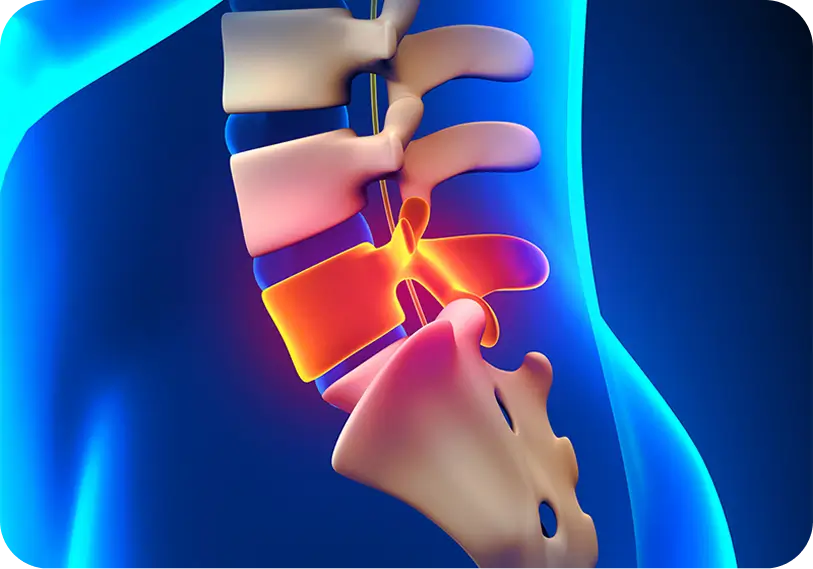
Low Back: Lumbar Fusion — PLIF / TLIF / XLIF
PLIF: Accessed from the back; reliable stabilization for severe stenosis or instability.
TLIF: Similar to PLIF but from an angled approach; less nerve retraction and quicker recovery.
XLIF: Side approach; minimally invasive with smaller incision, less blood loss, and faster initial recovery.
We select the least invasive option that achieves strong fixation, proper alignment, and the best long-term function for your spine.
Motion-preserving option: Artificial Disc Replacement
Decompression-only option: Lumbar Laminectomy
We match the procedure to the diagnosis, not hype. Existing imaging is reused; new studies are ordered only if they impact care.
Optimize nutrition and bone health for better recovery
(See Physical Therapy & Rehab and DEXA Review).
Don’t wait in pain — our expert spine specialists are available for same-day evaluations.

If pain shoots into the leg—or follows a crash or heavy lift—get a same-day evaluation. Red flags (weakness, fever, bladder/bowel issues) require urgent care. See Lower-Back Pain and Sciatica, then request an evaluation.
If pain shoots into the leg—or follows a crash or heavy lift—get a same-day evaluation. Red flags (weakness, fever, bladder/bowel issues) require urgent care. See Lower-Back Pain and Sciatica, then request an evaluation.
Contact us and set up your doctor visit today to start your journey to pain-free living